Antigone in ANTIGONE, Mount Holyoke College Fall 2025
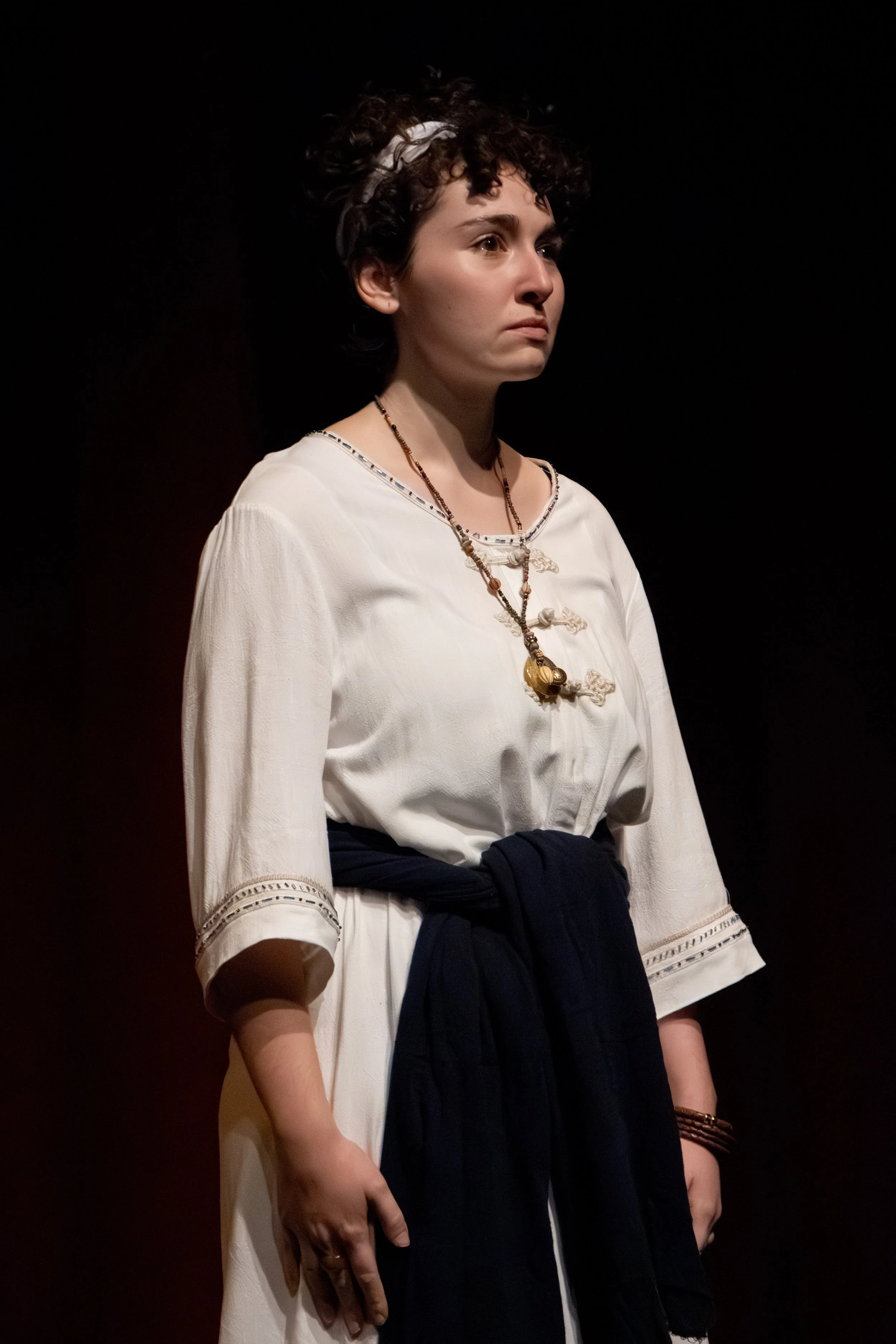
Photo by Tom Kelleher
The corpse of Antigone’s brother, Polynices, is rotting in the open sun, being picked to pieces by birds. Antigone’s uncle, Creon, has decreed that as an insurgent, Polynices does not deserve the rites of burial. Anyone who attempts to bury or mourn him will be stoned to death. Antigone, in an act of enormous courage and defiance of the crown, without the help of her remaining family, buries her brother Polynices. For this act, she is killed.
FULL CIRCLE
I began my formal theatre training in Greek chorus work in the 9th grade, with chorus pieces from the Oresteia. This was a time of great excitement for me, my first serious steps towards creating a life in the arts. The momentum and elation I associate with this period came to an abrupt halt with Covid. The rigor of all arts programming down-shifted with the adoption of zoom, and I forgot all about the Oresteia. The program that I was training under, Sacramento Theatre Company’s Young Professionals Conservatory, has since shut down along with STC itself.
My next brush with the Greeks was in the 11th grade, in drama class at school. We read two versions of Antigone, a translation of Sophocles, and Jean Anouilh’s 1941 adaptation. I remember being struck by the language, and realizing that there was a world of theatre beyond the bells and whistles of the musicals and light plays that I had been in until then.
In all honesty, this was a period in my theatre training that was really painful– a time when my would-be mentors made it clear that my dreams for myself were not possible. I shrank into self-doubt and belief in my own insufficiency. Despite my love for the text, I never would have imagined that I could do this sort of work.
Antigone was a sort of full-circle experience for me, a return to the belief I had in myself before others tried to make me feel small. I remember feeling a wave of pride in myself after callbacks, even before I knew the results, because I hadn’t let my self-doubt get the best of me in the room. To make it even more cyclical, my middle school drama teacher, one of my earliest mentors, flew from California to Massachusetts to see me as Antigone. I’m tearing up a bit writing this just thinking about it.
THE PROCESS
Antigone was the most challenging role I’ve ever undertaken. Greek drama operates at the furthest edges of human emotion– enormous grief, desperation, love, courage, etc. It’s not enough to figure out how Antigone sits or speaks, you need to unearth those emotive drives within yourself, and figure out a way to act them sustainably. I was lucky enough that Antigone, despite being a major downer, was elevated by an amazing chorus that danced, sang, played instruments, wept, screamed, and hauled corpses with an energy that gave the play a base of electricity.
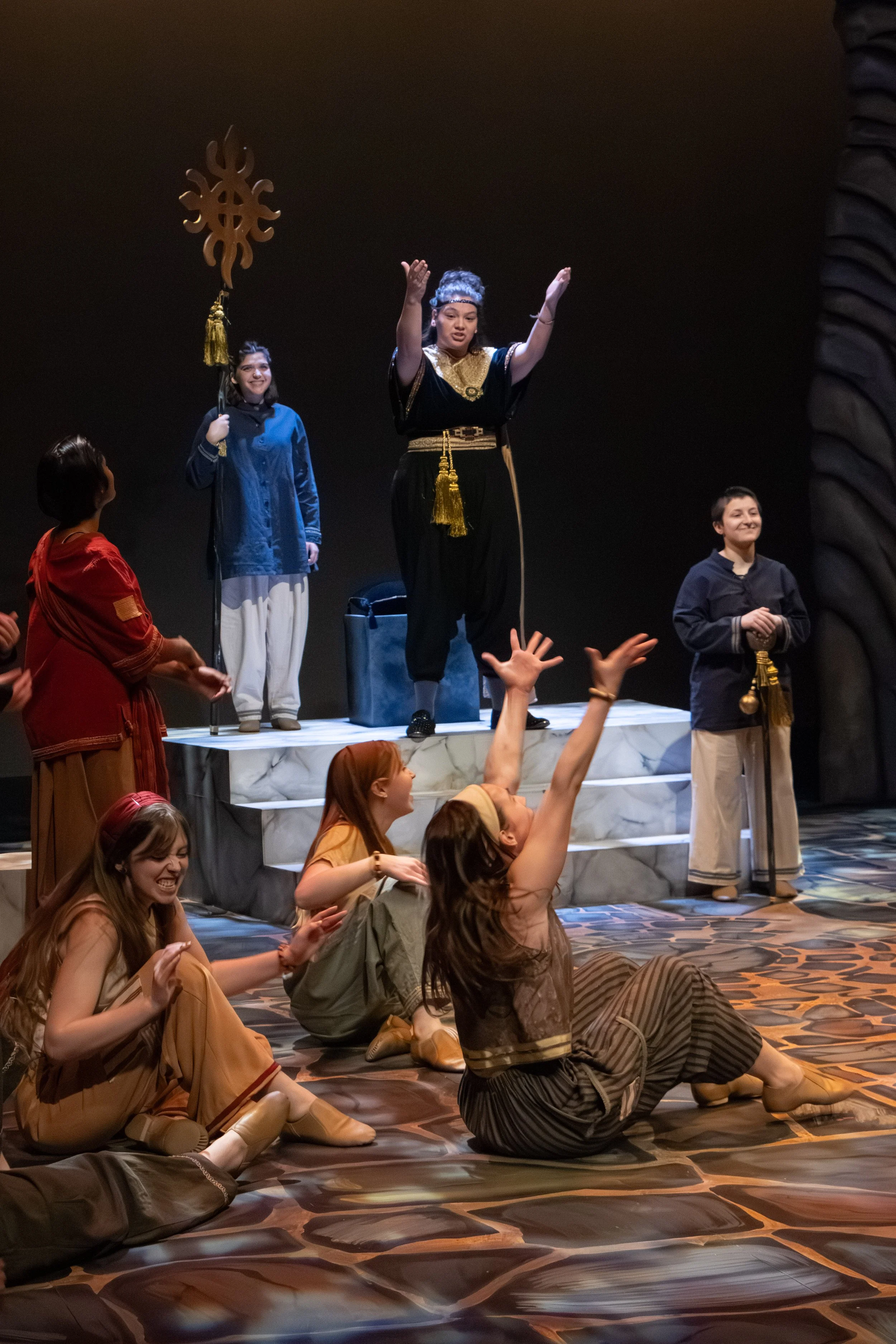
Creon addresses his public. Photo by Tom Kelleher
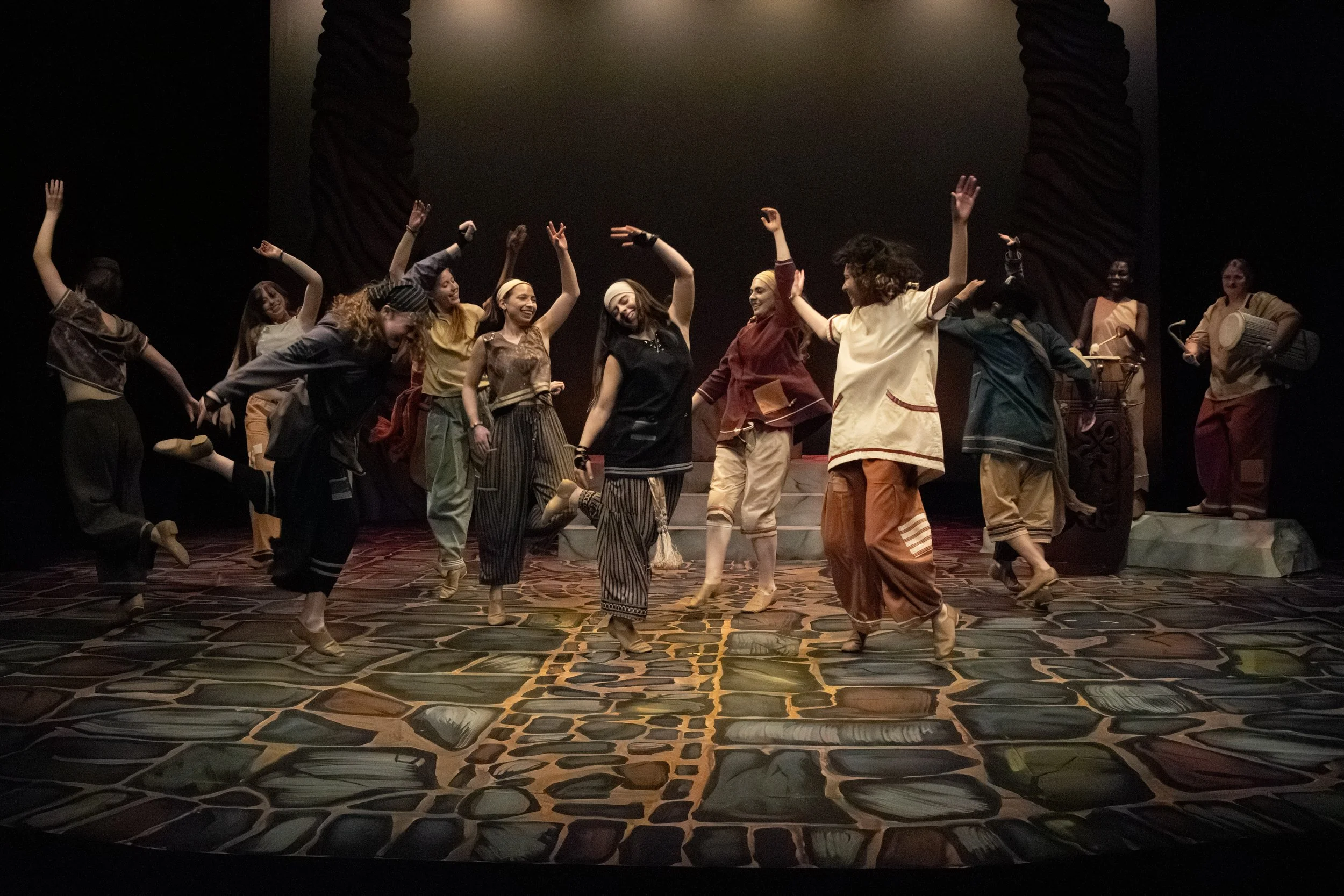
Chorus of Antigone celebrates the end of war. Photo by Tom Kelleher
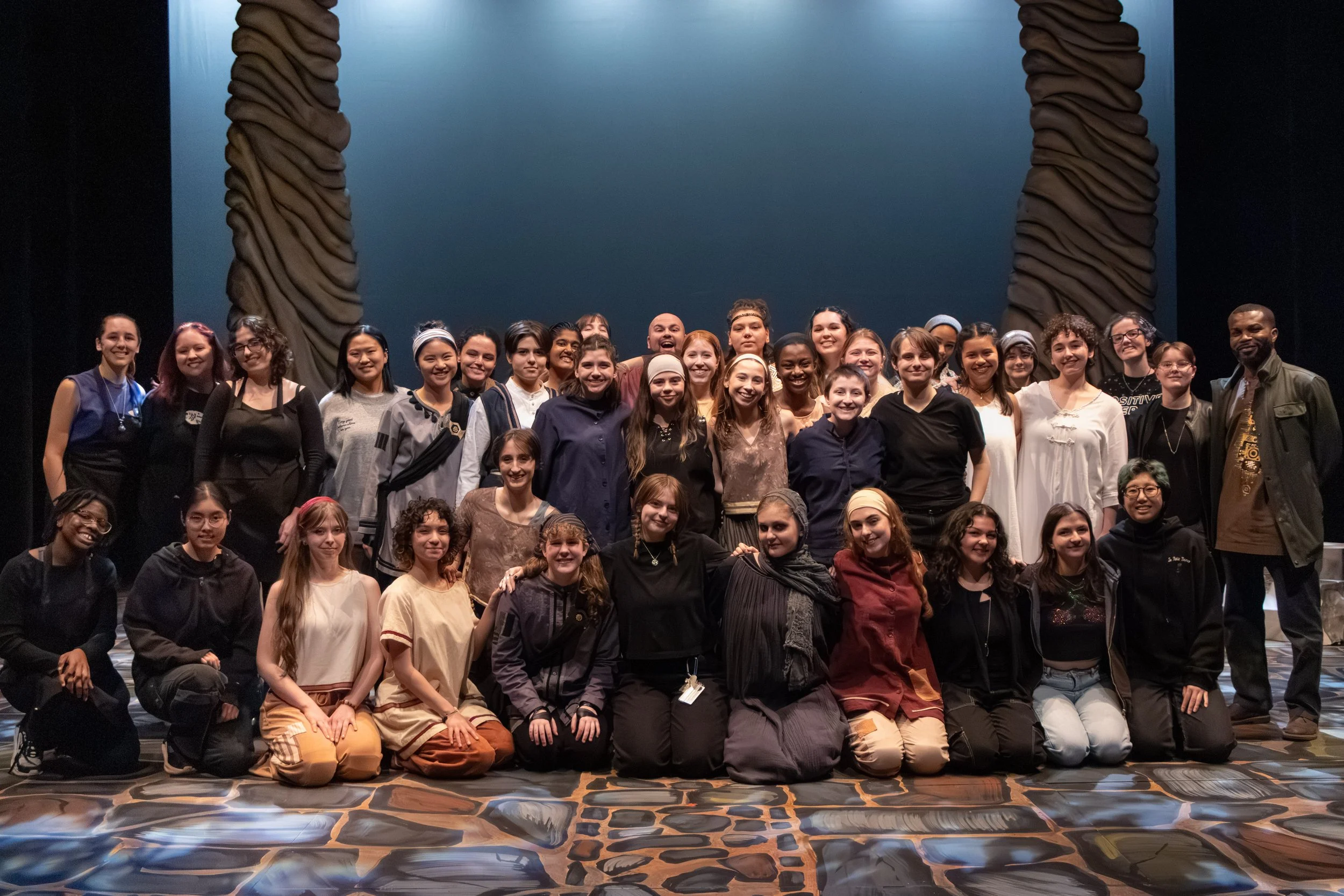
Cast and Crew of Antigone. Photo by Tom Kelleher
With Antigone, I turned to Michael Chekhov (not to be confused with Anton Chekhov, 19th century playwright and uncle to Michael Chekhov) and Alexander technique. I used Chekhov’s book On the Technique of Acting as a guide for my imaginative practice, in building images to call on as reference points. Alexander technique was primarily a physical tool for me, to practice ease and find where emotion manifests in the body. While these techniques were helpful, the brunt of my work was guided by our director, Michael Ofori.
Michael is a wonderful director. He has unparalleled creativity and vision. He is particular, and he definitely pushes us, but he is also enormously generous and kind. Michael was my rock. For example, I just didn’t know where to start on my last scene. It was a very intimidating bit of text, Antigone’s last appeal to her community before being led off to a remote cave, where she would be entombed and left to starve. In this appeal, we see the depth of her grief over the deaths of her mother, father, and brothers, and her fury as she invokes godly retribution against those who have wronged her. How could I ever do all that justice? Every time we rehearsed, I felt stuck, intimidated by the enormity of the stakes.
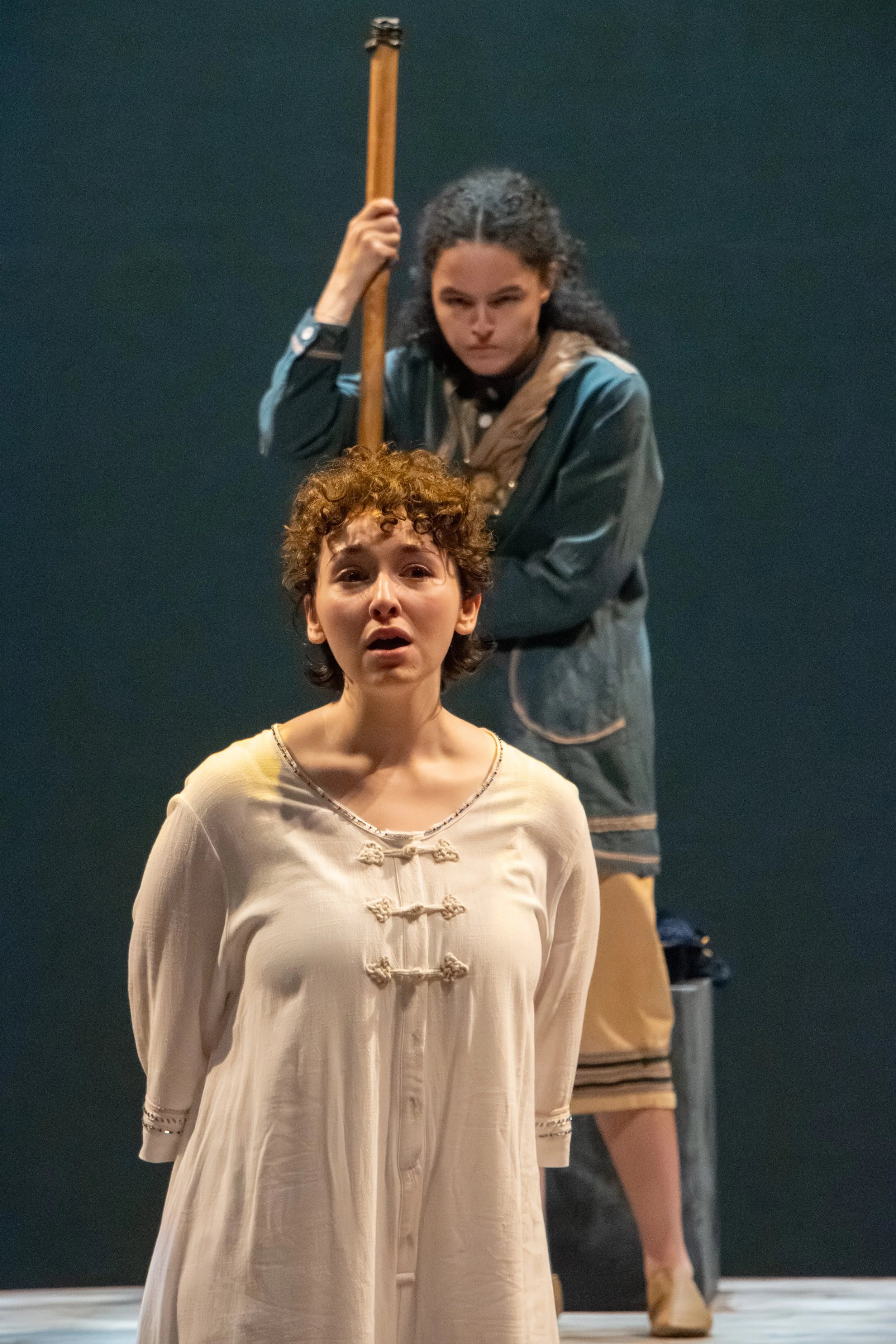
Photo by Tom Kelleher
One day Michael and I spent an afternoon breaking up the text into images, and the text transformed. It was like colors and textures were appearing from under the veil, details that I had never investigated or questioned before. Every piece of the scene became raw and visceral and new. Every night, that scene was the most vivid for me, and I would stumble offstage still tasting it.
I made sure to adopt a de-rolling process to make sure I wasn’t leaving the theater carrying Antigone with me. A few years ago, I read about Zoe Wanamaker’s de-rolling process while playing Electra. For those who aren’t familiar, de-rolling is an actor’s wellness technique that separates the actor from the world of their character, ensuring they aren’t taking home grief that isn’t their own. Wanamaker played Electra in 1998, winning an Olivier award for her portrayal. During the process, she developed a number of health issues because of the emotional weight of the role. A chiropractor recommended she find a physical item, like a doll, to leave in the theatre, and let the object carry the burden. Wanamaker ended up using a photograph of a little girl, and left it in a dressing room drawer when she wasn’t performing.
In my de-rolling routine, after Antigone was led off to die, and my time on stage would be done for the night, I would listen to Isolde’s Liebestod from Tristan und Isolde, and have a very cathartic cry. By the time the piece was over and the tears were out, I wouldn’t feel the weight so much. The final performance was a particularly intense listen. Did I do her justice? Was she ever reunited with her family? She must have been. I think I did a pretty clean job separating myself from her cross, but I still will cry anytime I hear any of the music from my Antigone playlist, more out of sympathy than anything.
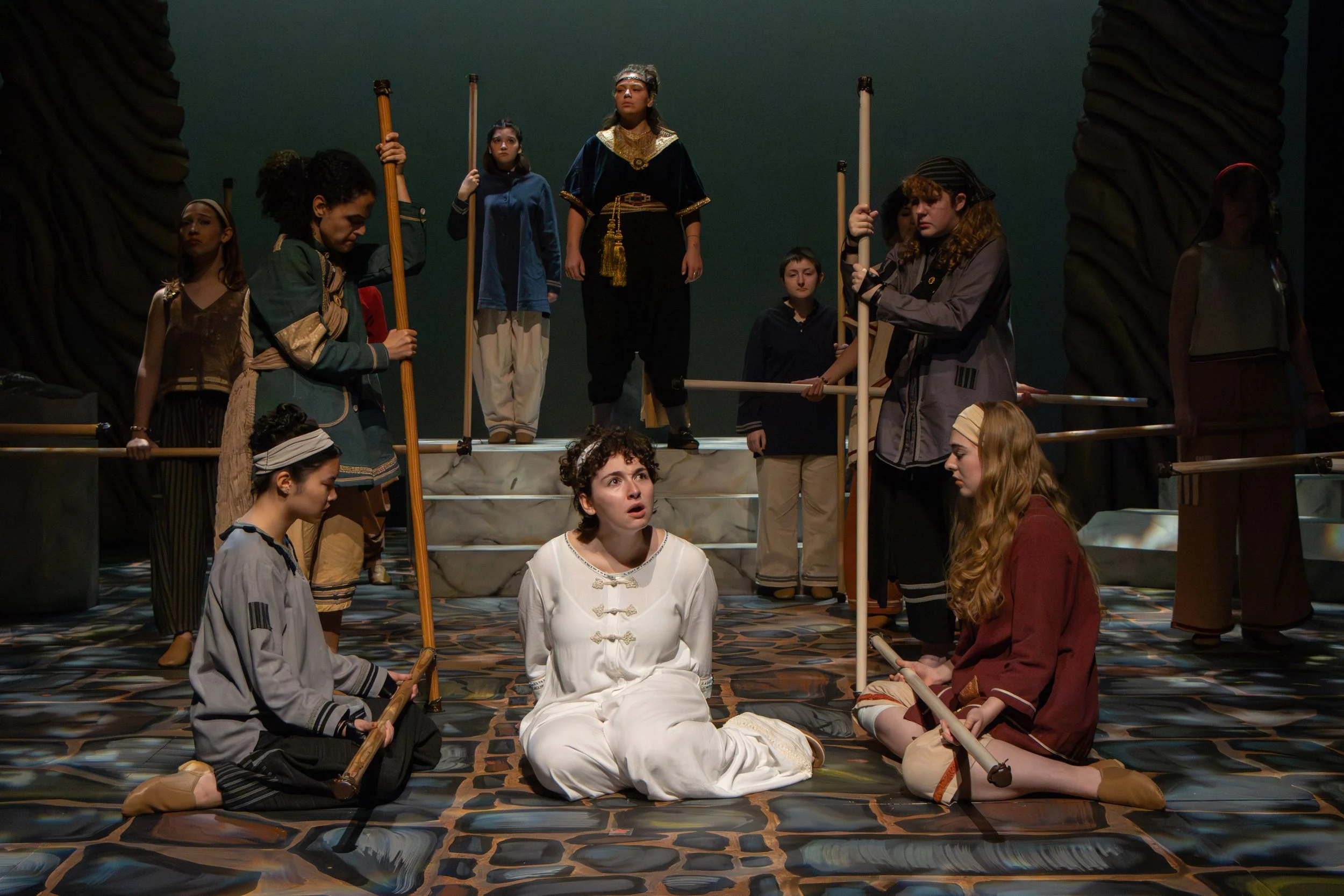
Antigone’s final appeal. Photo by Tom Kelleher
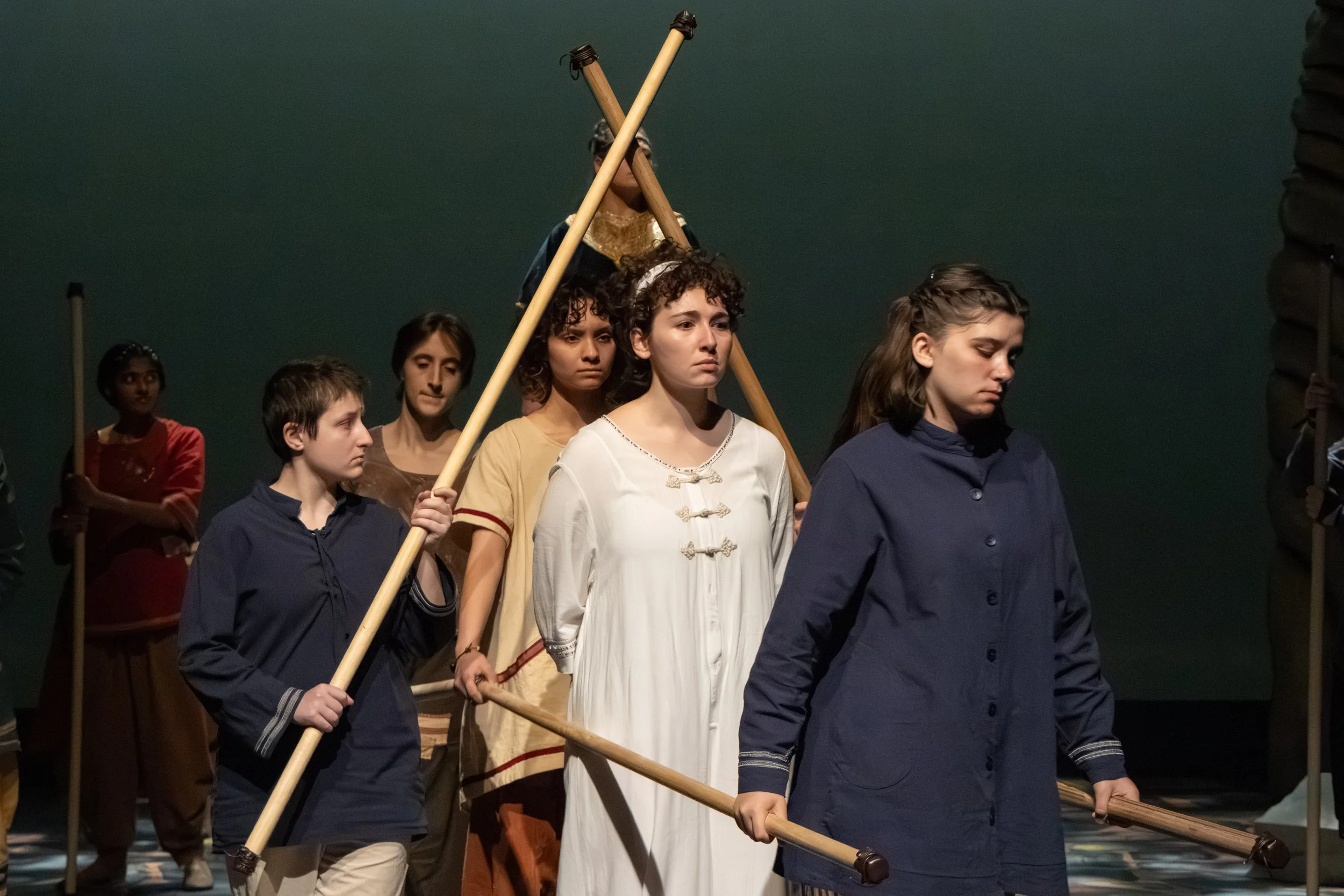
Antigone is lead to her fate. Photo by Tom Kelleher
ANTIGONE ENDURING
Antigone is a disgustingly timeless story. Throughout the process, I was cognizant of Antigone as an enduring, legendary figure, who lives on today in the families of the desecrated. In Gaza, the dead continue to be desecrated by the Israeli occupation. Today, we might gloss Antigone as a story of family loyalty, or of natural versus written law, but I feel that the theme of Antigone that demands our attention the most is power violating essential human dignities.
As I was going through rehearsals for Antigone, I was simultaneously taking a class called Decolonizing Museums. In Decon, we researched the legacies of large museums like the Smithsonian, whose collections contain the remains of ancestors who were poked, prodded, and desecrated in the name of racist pseudosciences. The majority of these ancestors were BIPOC, and it goes without saying that the methods these institutions used to obtain these people’s remains were exploitative or unethical at best, and outright graverobbing at the worst. These ancestors were at the forefront of my mind during Antigone. All people are deserving of essential dignities like burial. Today, the Smithsonian holds 30,000+ human remains, half of which are Native American.
It’s easy to think of Greek theatre as stodgy or archaic– that the heightened language and strange customs won’t mean anything to a modern audience. To a certain degree I think that’s true, that we will never take away the same things that an ancient audience would. But Antigone, despite being written 2000 years earlier than anything else I’ve performed, is easily the most urgent and relevant piece of theatre I’ve ever had the privilege to be a part of.
oops! looks like I let my blog atrophy for literally THREE YEARS. I am back and will be writing more consistently :-)